Wednesday, August 24, 2011
Friday, July 29, 2011
Great service from Lowes
Here is a copy of a message I posted to the Lowes' Facebook page. Reposting here so it gets picked up by the search engines.
Hi,
I want to share with you my experience at the Lowe’s in Acworth GA (#1651) this week. I’ve been shopping at this store since it opened and have always had good service, but this time was far better than I could have hoped for.
I was there with my daughter at dinnertime looking to buy double-keyed deadbolts that matched the sets we already have. Having rekeyed all the locks last summer, I thought that you couldn’t rekey a lock to an old key, so I had removed all the knob locks from the house and brought them with me to rekey them to the new deadbolts. The reason I was doing this was my 5 year old son, who is Autistic, started unlocking the doors and running away a few days before. Any chain or non-keyed lock we tried he quickly figured out how to defeat. It had been a stressful few days keeping an eye on him (and ear open during the night) to make sure he didn’t take off again.
I picked out the three deadbolts I wanted to buy and your associate Jerry asked if I needed help. I explained that I needed the deadbolts all keyed the same and the knobs I brought in rekeyed to match. He told me that he couldn’t rekey the knobs. But before he could continue I cut him off and told him they “did it last time, so why not now?”. (Even my daughter was surprised by my response, but in my defense I panicked a little trying to figure out how to get the house secured for my son.)
Jerry very nicely and very calmly explained that Lowe’s wasn’t a locksmith, BUT that the locks I had selected could be keyed to match my existing key. It took a few seconds for that to sink in, since in the past I’d never been able to get new locks with old keys, regardless of what store or company I took them to. Turns out the new Schlage locks are reprogrammable. At this point I apologized to Jerry and explained about my son. He was genuinely concerned about my problem and spent a lot of time showing me how the new locks worked and setting all the locks to match my old keys. Rather than sending me home with the locks and instructions, he set them all up for me.
By the time we were done Jerry must have spent 30 minutes with me getting things sorted out. He gave me his name and told me to call if I was having problems. He even apologized for the confusion about rekeying, but it was entirely my fault. I took the locks home and within 30 minutes had all the doors changed.
Can you forward this on to the Store Manager and thank her or him for having such a great staff and to Jerry for helping me when I was more than a little freaked out?
Thanks,
Chris Curtin
Friday, July 01, 2011
Dash shell reassembly
After all the work to cleanup and paint the metal frame that one will ever see again, it was time to put it all back together. Well, not everything. The HVAC piping needs to be cleaned and the foam insulation replaced, but the metal and the wires are back.
(Why work in the garage where it is 90+ degrees when the house is air conditioned and the computer with the 'before' pictures are in the house?)
Not a lot to see here. (If you want to see what individual parts of the wiring look like behind the plastic, go here)
Sunday, June 26, 2011
Book review: Be Different - adventures of a free range Aspergian
"Don't Self Diagnose!" was one of the first things I picked up when doing research into what could be going on with Christopher almost 3 years ago. It is really hard not to as you read about the behaviors of people actually diagnosed on the Autism Spectrum (ASD).
Reading this book certainly makes it hard not to. More about that later. First, my thoughts on this book.
"Be Different: Adventures of a Free-Range Aspergian" by John Elder Robison. This book is a series of stories and advice by a grown adult, probably in his late 40s or early 50's who was diagnosed with Asperger's syndrome when he was 40. It contains the stories of how he struggled through his education, teen years and first part of his life as an adult. He also points out some of the things that made him very successful in several different, very disparate fields. Everything from 'tuning' bicycles as a kid to custom electronics for music to specialized auto repair.
It is a fascinating story of his life experiences and how he can now associate them back to his Aspergian brain. In more than a few parts you can't help to feel sorry for him, and the later cheer him for not giving up or letting his 'diagnosis' define who he is. Even if you don't know someone with Aspergian's it is an interesting story to read. You'll be amazed how many things he associates with Aspergian's that we do ourselves or have known others to do as we grew up.
This book is also apparently where the term 'nypical' came from. I came across this term many times but never knew why/where it came from. Basically the author doesn't like calling someone 'normal' or 'typical' because no one really is. So he calls them 'nypical'.
The sections about how Apergian's can't read facial expressions, tone of voice etc were very interesting to read. I had to stop a few times and try to wonder what that would have been like.
Since we still don't know what exactly to call Christopher's challenges, I read this book in hopes of seeing and understanding what is going on with him. (Asperger's probably isn't one of them because of his language issues. Asperger's is often characterized by the strong, almost intense vocabularies. And the ability for those with the diagnosis to go on and on about one specific, obsessive topic.)
Back to my "Don't Self Diagnose" comment above. Reading this book it is really, really hard not to apply his stories to what happened to me as I grew up. But at the same time, many of the things he associates with his Asperger's seemed to happen to everyone growing up. In each chapter I can either see those things happening to me, my brothers or my friends. That being said, the vast majority of the people I get along with (brothers included) are like me, so I can't be sure that we all aren't suspects. (A whole other post will be about the recent research showing Autism clusters around hi-tech geographic areas. That one has me thinking A LOT)
For example, a huge number of the engineers I've met over the years, both hardware, software, mechanical, electrical etc. have made the same comment: I'm good at what I do because I can focus for a long period of time on something. As kids many of us got in trouble for doing this (I remember getting caught reading Star Wars in class, hiding it behind my regular book because I was obsessed with that story). In this book the author identifies this single, obsessive nature as a strength of Aspergian brains. Does that mean all of us who can focus (obsess?) on something for hours and days have Asperger's?
Another example, many people I've worked with, not just engineers but those drawn to a technical career have joked 'I have no idea how I ended up with'. Or their friends and family tease them about 'dating above their weight class'. (Or come up with interesting nick names for their girlfriends that are shots at me, not her.) The author of this book devotes an entire chapter to meeting women, the challenges and in the end he comes up with a basic premise: the women in his life have CHOSEN him. Nothing he did directly could have made them interested in him, they just became interested after getting to know him. (Also they exclusively made the first move) And that almost nothing he did in the relationships kept them around (which isn't the same as driving them away, more that his attempts at romance etc. fail miserably). They have decided that the benefits of being with him outweigh the quirks of him being Aspergian.
I'm still not sure how I feel about this observation. I think every guy jokes about wondering 'why she's still with me', but Deb was the one who approached me first, at a time where I had no idea what to do with girls and was failing miserably each time I tried... ;) And many of the wives/girlfriends over the years have joked(?) that they can deal with the quirks of us guys because of the other benefits.
One final thought about the book: The author ends with an interesting view of how things are different as an adult than when he was a kid. One of them hit home hard. When he was a kid he was teased, even by teachers, about his ability to become focused on something, learn about it very quickly and become an expert in a short period of time. As a kid he was 'odd' or 'nuts' (he uses 'nuts' to describe himself a lot in this book) and something to ridicule. As an adult he's seen as a fast learner and expert for the same qualities. I remember vividly being teased about my obsessions as a kid, but now how quickly I understand new things is called out regularly as one of my strengths.
So you can see why self diagnosis could be dangerous. And for the record I don't think I have Asperger's syndrome nor am I on the spectrum. I'm just a typical geek in the 21st century.
Reading this book certainly makes it hard not to. More about that later. First, my thoughts on this book.
"Be Different: Adventures of a Free-Range Aspergian" by John Elder Robison. This book is a series of stories and advice by a grown adult, probably in his late 40s or early 50's who was diagnosed with Asperger's syndrome when he was 40. It contains the stories of how he struggled through his education, teen years and first part of his life as an adult. He also points out some of the things that made him very successful in several different, very disparate fields. Everything from 'tuning' bicycles as a kid to custom electronics for music to specialized auto repair.
It is a fascinating story of his life experiences and how he can now associate them back to his Aspergian brain. In more than a few parts you can't help to feel sorry for him, and the later cheer him for not giving up or letting his 'diagnosis' define who he is. Even if you don't know someone with Aspergian's it is an interesting story to read. You'll be amazed how many things he associates with Aspergian's that we do ourselves or have known others to do as we grew up.
This book is also apparently where the term 'nypical' came from. I came across this term many times but never knew why/where it came from. Basically the author doesn't like calling someone 'normal' or 'typical' because no one really is. So he calls them 'nypical'.
The sections about how Apergian's can't read facial expressions, tone of voice etc were very interesting to read. I had to stop a few times and try to wonder what that would have been like.
Since we still don't know what exactly to call Christopher's challenges, I read this book in hopes of seeing and understanding what is going on with him. (Asperger's probably isn't one of them because of his language issues. Asperger's is often characterized by the strong, almost intense vocabularies. And the ability for those with the diagnosis to go on and on about one specific, obsessive topic.)
Back to my "Don't Self Diagnose" comment above. Reading this book it is really, really hard not to apply his stories to what happened to me as I grew up. But at the same time, many of the things he associates with his Asperger's seemed to happen to everyone growing up. In each chapter I can either see those things happening to me, my brothers or my friends. That being said, the vast majority of the people I get along with (brothers included) are like me, so I can't be sure that we all aren't suspects. (A whole other post will be about the recent research showing Autism clusters around hi-tech geographic areas. That one has me thinking A LOT)
For example, a huge number of the engineers I've met over the years, both hardware, software, mechanical, electrical etc. have made the same comment: I'm good at what I do because I can focus for a long period of time on something. As kids many of us got in trouble for doing this (I remember getting caught reading Star Wars in class, hiding it behind my regular book because I was obsessed with that story). In this book the author identifies this single, obsessive nature as a strength of Aspergian brains. Does that mean all of us who can focus (obsess?) on something for hours and days have Asperger's?
Another example, many people I've worked with, not just engineers but those drawn to a technical career have joked 'I have no idea how I ended up with
I'm still not sure how I feel about this observation. I think every guy jokes about wondering 'why she's still with me', but Deb was the one who approached me first, at a time where I had no idea what to do with girls and was failing miserably each time I tried... ;) And many of the wives/girlfriends over the years have joked(?) that they can deal with the quirks of us guys because of the other benefits.
One final thought about the book: The author ends with an interesting view of how things are different as an adult than when he was a kid. One of them hit home hard. When he was a kid he was teased, even by teachers, about his ability to become focused on something, learn about it very quickly and become an expert in a short period of time. As a kid he was 'odd' or 'nuts' (he uses 'nuts' to describe himself a lot in this book) and something to ridicule. As an adult he's seen as a fast learner and expert for the same qualities. I remember vividly being teased about my obsessions as a kid, but now how quickly I understand new things is called out regularly as one of my strengths.
So you can see why self diagnosis could be dangerous. And for the record I don't think I have Asperger's syndrome nor am I on the spectrum. I'm just a typical geek in the 21st century.
Friday, April 22, 2011
Spring Baseball for Christopher
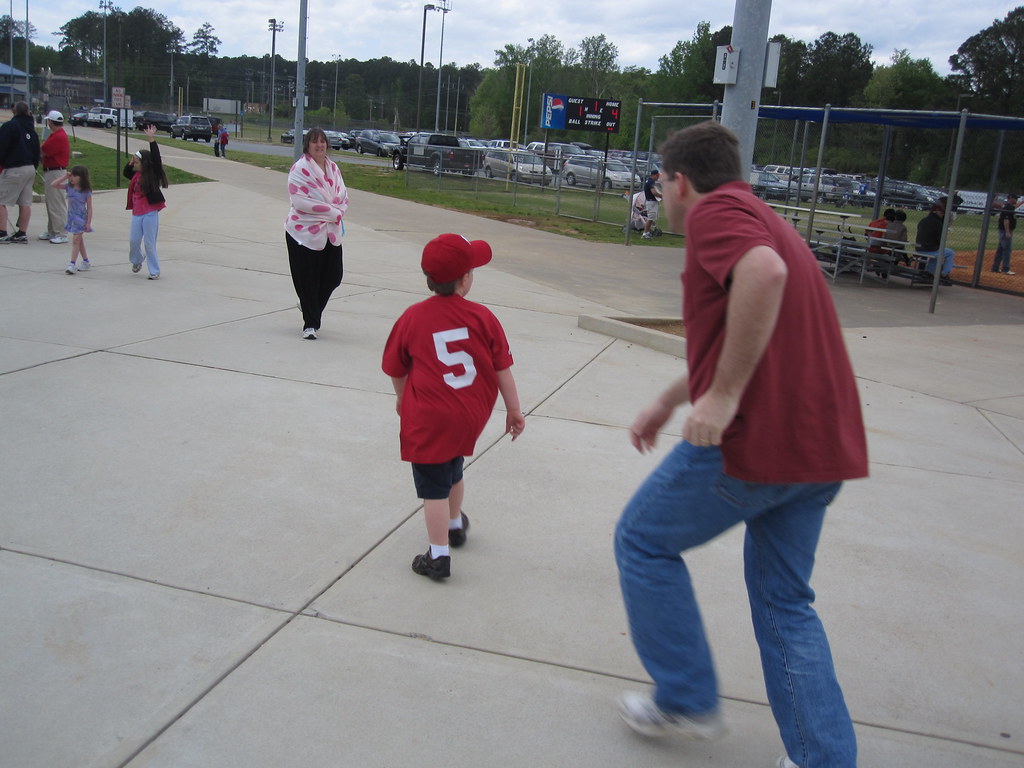
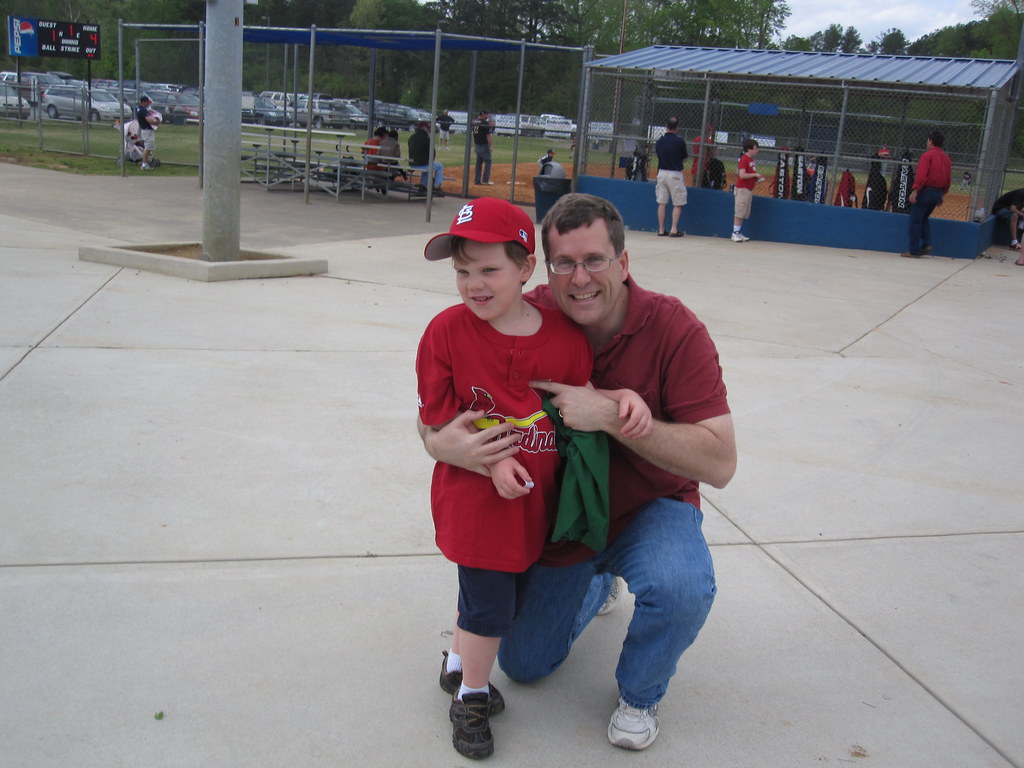
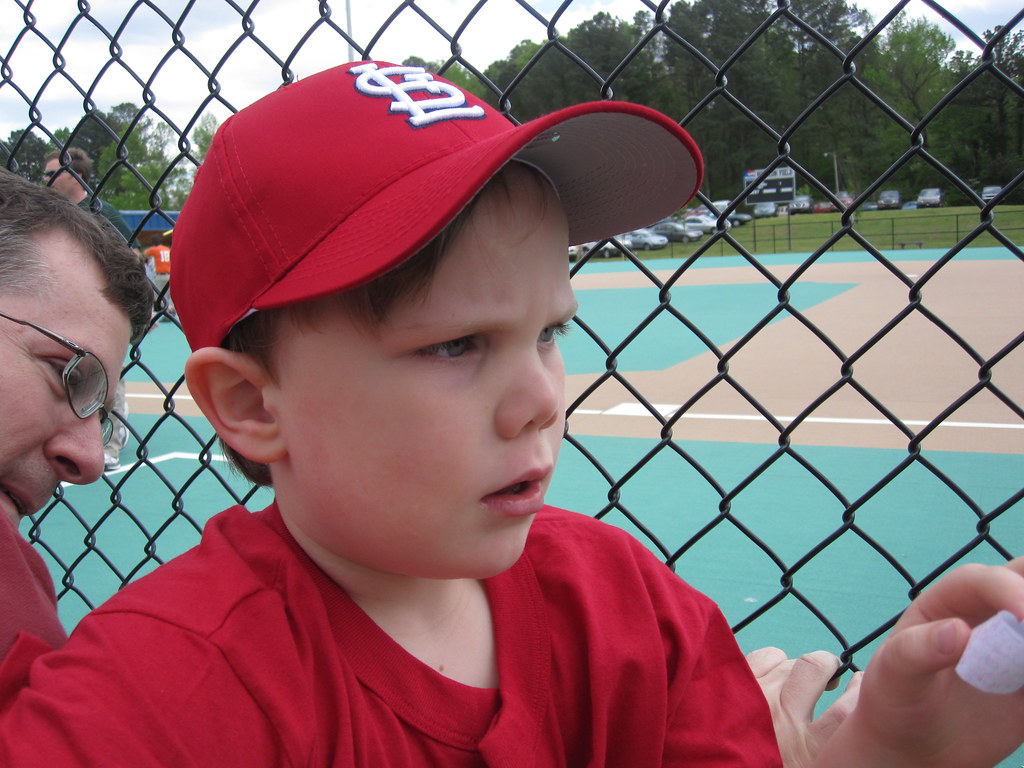
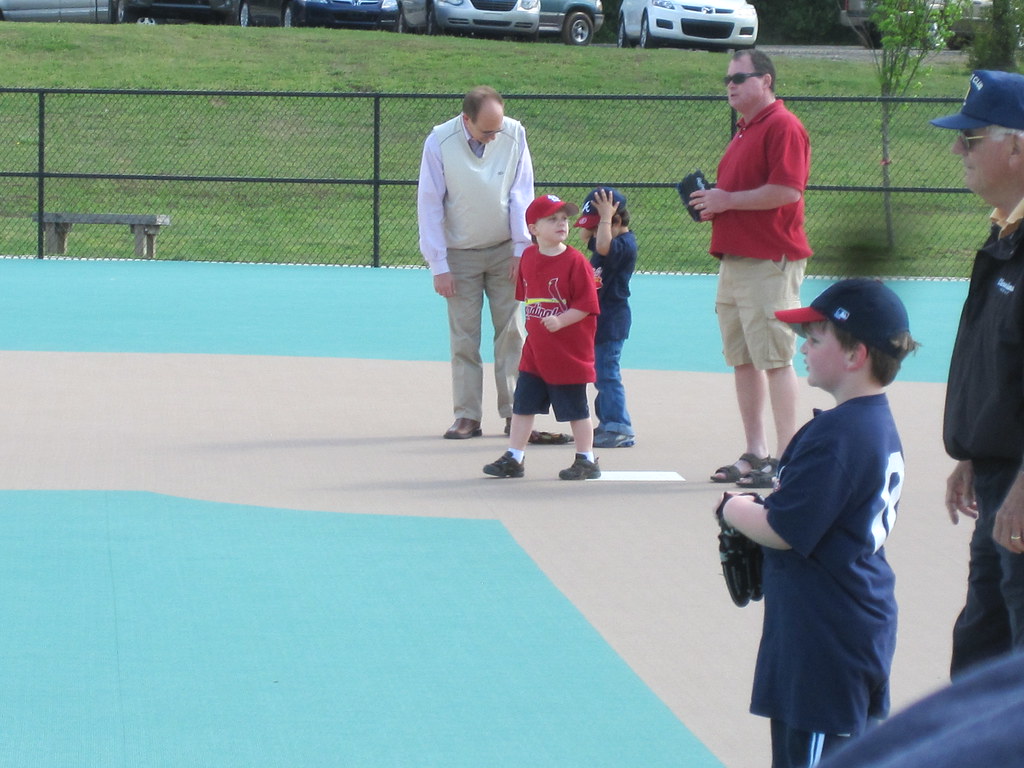
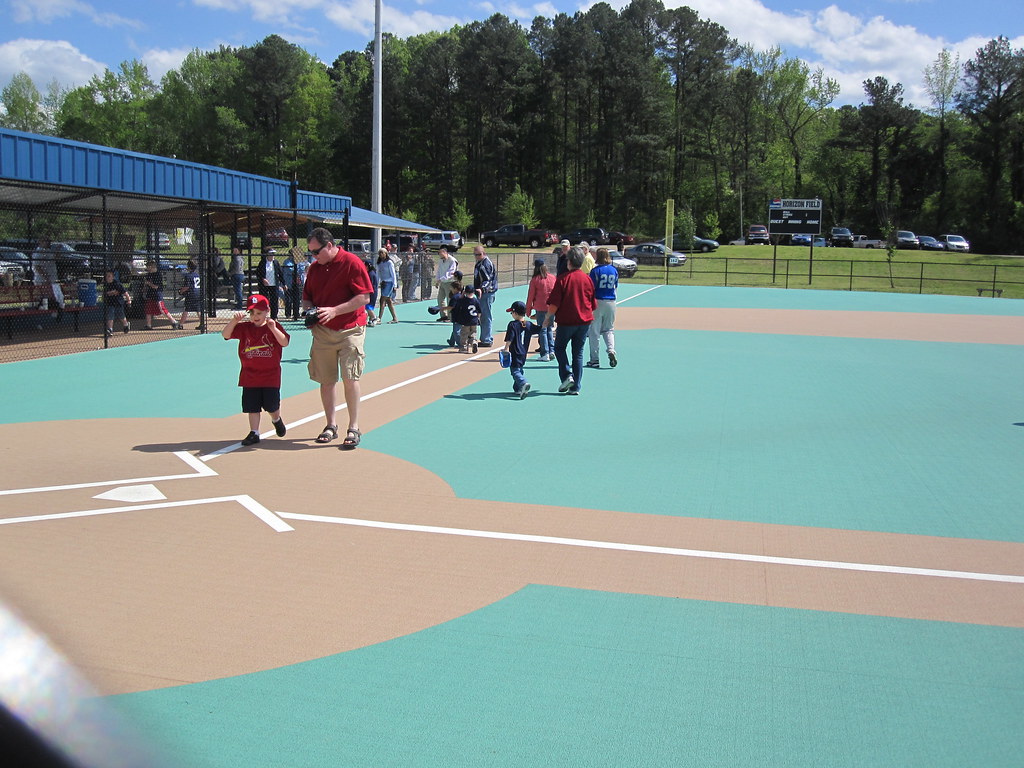
Last Saturday was Christopher's first game for the Spring season. He's playing at the Horizon Field in Acworth.
This is a big step for him. At the suggestion of a lot of people, including his doctor, we tried him in t-ball last Fall at Adams Park. After one practice it was obvious that he wasn't ready to do a mainstream league, but he was too young for the special needs field.
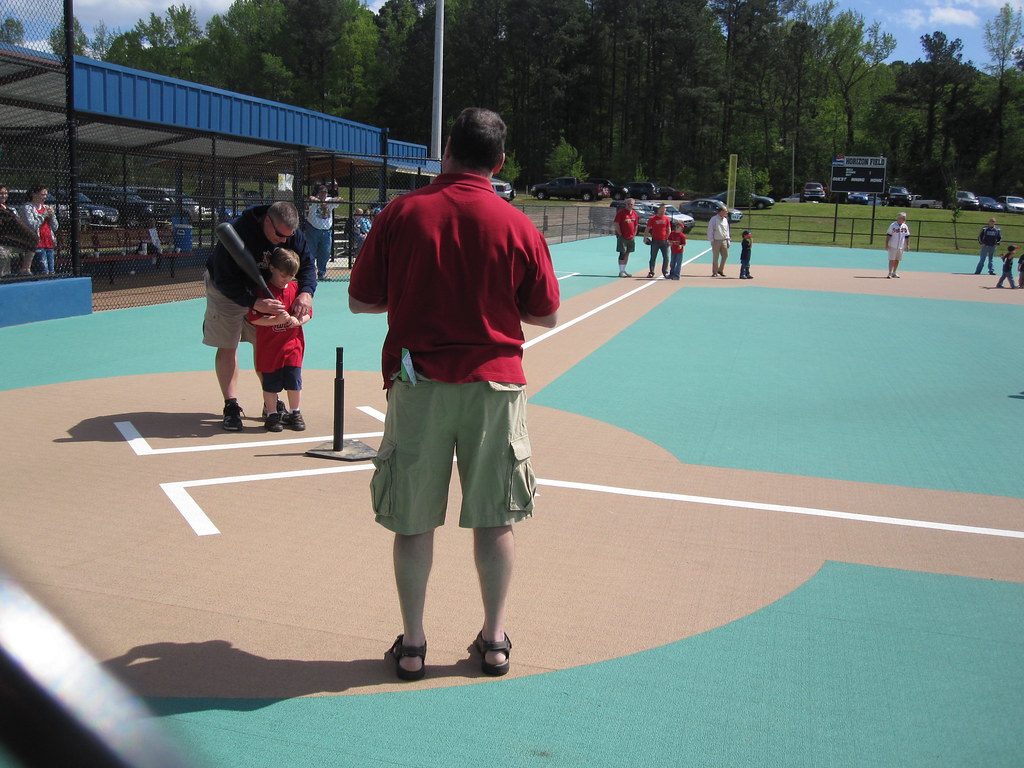
The field is different than anything I've seen before. It is totally fenced in with the only way in or out through the dugouts. The field is 100% playground soft/spongy with no dirt or grass.
Every player as a 'buddy', usually a teenage boy or girl, but there are a number of adults for those kids needing extra help. Every kid gets three swings at pitches (if they can hit coach pitched) or use the tee until they hit. When the ball is hit the kids run until one of the opponents get the ball, then they stop. They do try to throw to the correct bases and the buddies help with catching and telling where to throw.
Parents are not allowed on the field. They want the parents to watch instead of running around with the kids.
Christopher's buddy was a guy probably a little older than me who was wonderful with him.
Christopher got up twice (like all the other kids) and had good hits. He didn't do so well running to base, but I think he got the idea the second time.
He definitely understood going after the ball, though sometimes not throwing it to the base. Still I think he had a good time.
This was strange. Usually Christopher is the largest boy, often mistaken for someone 3 years older. Here, he is the smallest.
This is a big step for him. At the suggestion of a lot of people, including his doctor, we tried him in t-ball last Fall at Adams Park. After one practice it was obvious that he wasn't ready to do a mainstream league, but he was too young for the special needs field.
The field is different than anything I've seen before. It is totally fenced in with the only way in or out through the dugouts. The field is 100% playground soft/spongy with no dirt or grass.
Every player as a 'buddy', usually a teenage boy or girl, but there are a number of adults for those kids needing extra help. Every kid gets three swings at pitches (if they can hit coach pitched) or use the tee until they hit. When the ball is hit the kids run until one of the opponents get the ball, then they stop. They do try to throw to the correct bases and the buddies help with catching and telling where to throw.
Parents are not allowed on the field. They want the parents to watch instead of running around with the kids.
Christopher's buddy was a guy probably a little older than me who was wonderful with him.
Christopher got up twice (like all the other kids) and had good hits. He didn't do so well running to base, but I think he got the idea the second time.
He definitely understood going after the ball, though sometimes not throwing it to the base. Still I think he had a good time.
This was strange. Usually Christopher is the largest boy, often mistaken for someone 3 years older. Here, he is the smallest.
Sunday, April 10, 2011
Nice having a chauffeur
Meghan is 16 and has her permit, so she's always asking us to take her driving. Well, on Saturday she got her wish, big time.
I had her drive me all over the place Saturday morning. First a 40+ minute drive to the speed shop to pick up a part for the Capri. This was on roads she doesn't know and at speeds from 35 to 55. She did great. Even did good turning the Mustang around in the parking lot where many of the motors in the cars there cost more than the Mustang is worth! Then had her drive back, this time a different way, so different roads again.
Then had her drive me around Acworth/Kennesaw for a few stops, including parking in a very crowded Home Depot. Her only reward was a lunch at Zaxby's!
I could get used to this. Except the part with no radio and saying 'a little to the left Meghan' all the time.
I had her drive me all over the place Saturday morning. First a 40+ minute drive to the speed shop to pick up a part for the Capri. This was on roads she doesn't know and at speeds from 35 to 55. She did great. Even did good turning the Mustang around in the parking lot where many of the motors in the cars there cost more than the Mustang is worth! Then had her drive back, this time a different way, so different roads again.
Then had her drive me around Acworth/Kennesaw for a few stops, including parking in a very crowded Home Depot. Her only reward was a lunch at Zaxby's!
I could get used to this. Except the part with no radio and saying 'a little to the left Meghan' all the time.
Wednesday, March 30, 2011
Horn cover!
Quick update. Was able to get the ball joint cover installed and the driver's side suspension put back together.
I also installed some Maximum Motorsports solid Caliper sleeves to hold the brake pad against the rotor.
Lots planned for next week. Kids are on Spring Break so I'm taking the week off to do things with them (and work on the car!) Hopefully the MM bumpsteer kit and hybrid steering shaft will arrive. I'll order the 2003 Mustang Cobra rack tomorrow and it should be here on Saturday too!
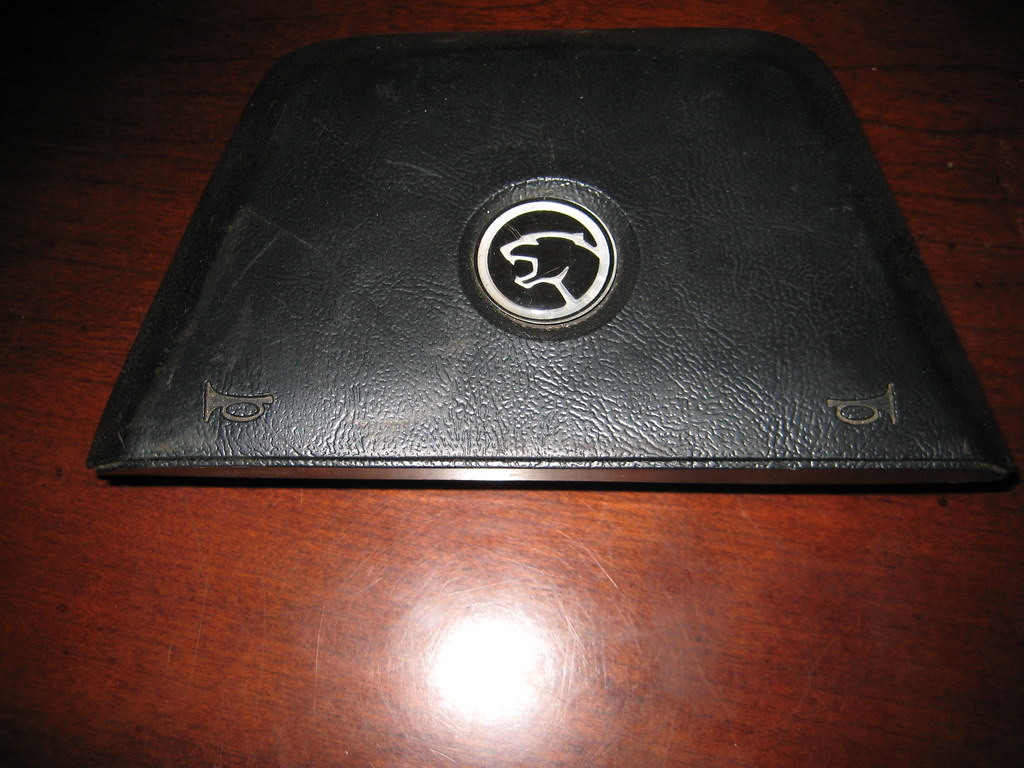
One thing that's been bothering me about the car is that the 'cat' head on the horn cover is long gone. I looked around a lot last year for one and no one was selling them. Well, I found one on eBay for $5. Plus $5.20 shipping!
Here it is:
I also installed some Maximum Motorsports solid Caliper sleeves to hold the brake pad against the rotor.
Lots planned for next week. Kids are on Spring Break so I'm taking the week off to do things with them (and work on the car!) Hopefully the MM bumpsteer kit and hybrid steering shaft will arrive. I'll order the 2003 Mustang Cobra rack tomorrow and it should be here on Saturday too!
One thing that's been bothering me about the car is that the 'cat' head on the horn cover is long gone. I looked around a lot last year for one and no one was selling them. Well, I found one on eBay for $5. Plus $5.20 shipping!
Here it is:
Sunday, March 06, 2011
Christopher and the toy Mustang
About 15 years ago I bought an 97 Mustang Cobra radio controlled car. For years as the girls were growing up it was a staple at birthday parties and get togethers with friends as I would take it out and the kids would chase it or have me run between their legs.
Last weekend it was unseasonably warm, so I got the car out and played with Christopher and Courtney. Here is a video of them chasing it.
You can clearly hear Christopher at the beginning saying 'my turn, my turn' which is a huge step for him. At his last IEP we were told that he doesn't understand taking turns and it is something we've been working on with him.
Last weekend it was unseasonably warm, so I got the car out and played with Christopher and Courtney. Here is a video of them chasing it.
You can clearly hear Christopher at the beginning saying 'my turn, my turn' which is a huge step for him. At his last IEP we were told that he doesn't understand taking turns and it is something we've been working on with him.
Thursday, January 20, 2011
Why digital Newspapers are bad for kids
Isn't it strange the things we remember as kids? I very clearly remember going to Ed's Cigar Box on Main Street in Danbury, CT to get the Sunday papers with my Dad. He'd get the New York Times, the New York Daily News and I think the Danbury News Times (or the Danbury paper was delivered on Sunday, since it was delivered every day.)
I remember their always being today's paper in the house for me to read the comics. And eventually for me to start paying attention to the other sections. I think this was a big part of why I love reading today. Pre-internet I would read anything I could get my hands on. Sometimes to put it down immediately, sometimes to read it fascinated by something I hadn't read before. In college I was one of the few people on my floor who got the Boston Globe every day (I know, I pretty much skipped the sports sections) and remember a woman on the floor asking me why I get it. And not being surprised later when she told me she hates reading.
Why the trip down memory lane? Because I think the movement away from dead-tree newspapers and magazines to digital in the home is a very bad thing.
This last weekend my now-13 year old rummaged through the Sunday paper, got the comics and sat and read all of them. She's been doing that for several years and sometimes stops to look at other parts. My 16 year old hunts out the ads and Parade also sometimes stopping to look at the other stories.
It occurred to me a few weeks ago that I don't think they would have taken time from whatever stupid TV show or Facebook game they were playing if they hadn't seen me reading all these years. When Deb and I moved to Atlanta in 1990 I subscribed to the Atlanta Journal (or Atlanta Constitution, I can't remember which was the afternoon paper before they merged). I was a subscriber until about 3 years ago when I got sick of the incredibly Liberal views and superficial reporting of events. So I started receiving the Wall Street Journal. A lot more conservative, but a lot more stories and better depth into the stories. So for their entire lives my kids have had daily newspapers and lots of magazines in the house and have seen me and Deb reading them.
So what does this have to do with digital? The WSJ has an online version and I expect an iPad version soon. Many magazines have online versions and iPad versions too.
The difference is when a child is watching their parents do something, what they see now is not them reading a newspaper or magazine that they can pick up, it is the parents on the computer. Which at first is no different than when they play a game or watch a YouTube video, so they don't see something to mimic. Or something to catch their attention.
I have pictures of my daughters sitting on the floor at various ages looking at my magazines. No way they would understand them, but at least they were doing what I did. And as they started to read, they found lots and lots of things to read 'laying around'.
Look around your house. What is to read that is just sitting around vs. something that you have to boot up to see?
Here is a case where 'do as I do' can have a very powerful change in a child's life.
Another memory I have, in fact something that still happens, is the various articles that my parents or Deb's mom would send me/her/us. Things about investing, about raising children, funny stories. I don't know how many Zits and Calvin and Hobbes cartoons my mom mailed to me in college, but it was a way for us to communicate.
Today, you get a link in an email. Or dozens of them. It isn't the one thing that Mom read and said 'Boy, I think Chris needs to know this', it is whatever joke they got forwarded, so I don't pay them as much attention. (Following in all of their footsteps, I save newspaper articles for my kids and share them. Though I do also send lots of things to them via email)
No, I'm not being a Luddite. Heck I'm anything but one at work and in my personal life, but having a PDD-NOS child who struggles with so many things that we take for granted, I am looking at how he learns more closely than I did with either of the girls.
What I see is a lot of mimicking, including looking at the pictures in my magazines or the Sunday ads. Unlike the girls he doesn't make up what he thinks the pictures are about, but he is looking at them. So I am going to make damn sure I leave things 'laying around' and being a good example to him so in hopes that one day his basic mimicking that he does today turns into recognition and maybe some day reading.
So if you are an adult with children in the house or frequent visitors (grandparents, family etc.) please think about ways to 'leave things sitting around' so the kids can see you using them and mimic you.
I remember their always being today's paper in the house for me to read the comics. And eventually for me to start paying attention to the other sections. I think this was a big part of why I love reading today. Pre-internet I would read anything I could get my hands on. Sometimes to put it down immediately, sometimes to read it fascinated by something I hadn't read before. In college I was one of the few people on my floor who got the Boston Globe every day (I know, I pretty much skipped the sports sections) and remember a woman on the floor asking me why I get it. And not being surprised later when she told me she hates reading.
Why the trip down memory lane? Because I think the movement away from dead-tree newspapers and magazines to digital in the home is a very bad thing.
This last weekend my now-13 year old rummaged through the Sunday paper, got the comics and sat and read all of them. She's been doing that for several years and sometimes stops to look at other parts. My 16 year old hunts out the ads and Parade also sometimes stopping to look at the other stories.
It occurred to me a few weeks ago that I don't think they would have taken time from whatever stupid TV show or Facebook game they were playing if they hadn't seen me reading all these years. When Deb and I moved to Atlanta in 1990 I subscribed to the Atlanta Journal (or Atlanta Constitution, I can't remember which was the afternoon paper before they merged). I was a subscriber until about 3 years ago when I got sick of the incredibly Liberal views and superficial reporting of events. So I started receiving the Wall Street Journal. A lot more conservative, but a lot more stories and better depth into the stories. So for their entire lives my kids have had daily newspapers and lots of magazines in the house and have seen me and Deb reading them.
So what does this have to do with digital? The WSJ has an online version and I expect an iPad version soon. Many magazines have online versions and iPad versions too.
The difference is when a child is watching their parents do something, what they see now is not them reading a newspaper or magazine that they can pick up, it is the parents on the computer. Which at first is no different than when they play a game or watch a YouTube video, so they don't see something to mimic. Or something to catch their attention.
I have pictures of my daughters sitting on the floor at various ages looking at my magazines. No way they would understand them, but at least they were doing what I did. And as they started to read, they found lots and lots of things to read 'laying around'.
Look around your house. What is to read that is just sitting around vs. something that you have to boot up to see?
Here is a case where 'do as I do' can have a very powerful change in a child's life.
Another memory I have, in fact something that still happens, is the various articles that my parents or Deb's mom would send me/her/us. Things about investing, about raising children, funny stories. I don't know how many Zits and Calvin and Hobbes cartoons my mom mailed to me in college, but it was a way for us to communicate.
Today, you get a link in an email. Or dozens of them. It isn't the one thing that Mom read and said 'Boy, I think Chris needs to know this', it is whatever joke they got forwarded, so I don't pay them as much attention. (Following in all of their footsteps, I save newspaper articles for my kids and share them. Though I do also send lots of things to them via email)
No, I'm not being a Luddite. Heck I'm anything but one at work and in my personal life, but having a PDD-NOS child who struggles with so many things that we take for granted, I am looking at how he learns more closely than I did with either of the girls.
What I see is a lot of mimicking, including looking at the pictures in my magazines or the Sunday ads. Unlike the girls he doesn't make up what he thinks the pictures are about, but he is looking at them. So I am going to make damn sure I leave things 'laying around' and being a good example to him so in hopes that one day his basic mimicking that he does today turns into recognition and maybe some day reading.
So if you are an adult with children in the house or frequent visitors (grandparents, family etc.) please think about ways to 'leave things sitting around' so the kids can see you using them and mimic you.
Subscribe to:
Posts (Atom)